
Loading
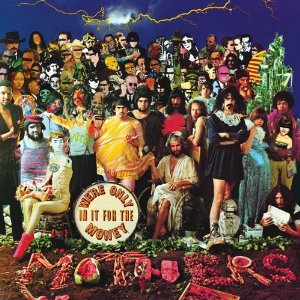 Frank Zappa/Mothers Of Invention
There's no denying the importance of the late Frank Zappa (who died almost 20 years ago, in 1993) within the context of music and cultural history - whatever you might think of his music. Much of it has produced extreme reactions even amongst the most tolerant and broad-minded of music fans, and those with more orthodox tastes have found the Zappa experience incomprehensible, or bizarre at best, for the sheer diversity (and seemingly wilful inconsistency) of his output has in turns bewildered and infuriated even his staunchest admirers, embracing almost literally anything from iconoclastic experimental pop and rock to greasy retro doowop; guitar extravaganzas, jazz and improv to defiantly avant-garde electronics and musique-concrète to resolutely contemporary classical; scathing satirical and political commentaries to more scurrilous and deliberately offensive lyrics… and that was just scratching the surface. (While those of us with long memories can have a field-day spotting the influences and cross-pollination to the wider "underground" music scene - filtered into anything from the Beatles' White Album and its nigh-unlistenable Revolution #9 to the more wilful escapades of the latter-day Bonzos…)
This batch of reissues marks the first instalment in a comprehensive CD and digital reissue programme which would appear to be the answer to every Zappa fan's prayers and provide an ideal opportunity for non-believers to experience the man's music as initially conceived for release as it originally appeared on his own independent label Barking Pumpkin Records. The accompanying press release proudly proclaims: "Back home, where it belongs, the music of Frank Zappa is now back in the hands of the Zappa Family Trust. In celebration, the estate has signed a global license and distribution deal with Universal Music Enterprises to release 60 of the composer's recordings … the UME deal encompasses the entire Zappa catalogue". Following the launch of the first dozen titles (31st July), the remainder will, we're told, be released on a monthly basis (and/or in successive batches of 12) thereafter. A key phrase nestling within the press release is the statement that "many of the original analogue masters have been re-mastered": a point to which we will return later… for this phrase both reveals and conceals some vital detail which needs to be evaluated before declaring this vastly important exercise an unqualified triumph (which I'm afraid is in the end not quite possible).
The early Zappa/Mothers albums in particular were notoriously difficult nuts to crack for the average music fan, for even by the standards of the time (1966 thru 1969) they were considered seriously weird. I recall being perplexed by even the more "straight" aspects of Freak Out!, the first of the albums to appear here in the UK (on the Verve label, and in a truncated format - tho' I didn't realise at the time, it was a double album that'd been edited down to fit onto a quite long single LP). Its very strange, nay inscrutable mix of cruddy garage-band, scathing satire and in-jokes, all clothed in slightly zany scoring complete with classic barbershop, cheesy rock'n'roll and rocky-horror posturings, splashes of determined weirdness and ultra-freaky experimentation and more than a dash of deliberate silliness, was perversely attractive, and this latest single-disc CD edition restores all its tracks in splendid remastered sound, bringing brilliant clarity to all the music's wondrous idiosyncrasies. It's also a really good place to start, incidentally (once you've proved you can cope with its out-of-control speed-freak dash-to-the-finish on Return Of The Son Of Monster Magnet!) …
Absolutely Free (also known as The MOI American Pageant), although strictly speaking coming very soon after Freak Out!, was not readily available here in the UK at first, so it tended to be overlooked as fans passed straight on to We're Only In It For The Money. Absolutely Free thus seemed a strange progression, which only with hindsight has attained any sense of musical logic - and then not easily. We've also since discovered that the recording sessions suffered from budgetary and time constraints and the whole release was rushed out somewhat. But it contains some landmark innovations and daring (for mere "pop") passages, and premièred Zappa's subsequently-much-imitated creative approach to seamless track sequencing (significantly, pre-Sgt. Pepper!) as well as containing a notable early example of Zappa's own guitar heroics. A further prefiguring of Zappa's future cut-and-paste tendencies was given by the frank (sic) admission in the liner note that the record's various segments were written over a period of several years. Discographical note: two bonus tracks (both sides of the single Big Leg Emma) are sandwiched in between the original album's two halves. Technical note: since this new reissue uses the original 1967 mix, it doesn't have the artificial digital reverb that Zappa brought to bear on its previous CD incarnation, so this is certainly the version to have.
The ensuing release, Lumpy Gravy, was even less like a conventional band album, for it was in no way a straight collection of distinct, structured songs (even in the slightly unorthodox sense of those on Freak Out!); instead, it presented a decidedly weird half-hour's sound-collage that was seemingly randomly stitched together out of incredibly disparate elements. And a movie soundtrack in all but name to boot… with several of the work's themes set to recur right through Zappa's subsequent output (he termed the practice "conceptual continuity"), and presenting early instrumental tryouts of King Kong and songs like Oh No and Take Your Clothes Off When You Dance, distinctly rude-sounding electronica snippets and snorks, snatches of cryptic verité-dialogue, faux-retro-jazz, surf music and dissonant Varèse-like orchestral passages. Zappa didn't even play on the sessions himself, but conducted the musical sections via the capable hands of the Abnuceals Emuukha Electric Symphony Orchestra & Chorus. This reissue uses the 1993 Zappa digital master as its source, and sounds just fine - but of the early Zappa albums, this one still provides the toughest listen.
We're Only In It For The Money is the undisputed masterwork of Zappa's early years, an admittedly controversial musical and artistic statement that hits hard on so many levels. It's the ultimate parody, not only of the celebrated Sgt. Pepper album - sleeve artwork, concept, musical pretensions, crummy reprise track and all - but, most ironically, also of the counter-culture itself, the very culture that it works so cleverly to subvert from within while concurrently satirising the establishment. For neither alternative was acceptable: neither the American Dream nor the Hippy Dream. Zappa clearly relishes his role as musical and social anthropologist and steers his trusty band through arguably the most consistently realised sequence of his career. Its commentaries are spot-on, its in-jokes not overly exclusive, its experimental moments don't overstay their welcome, and it contains some of the most memorable songs of the era, cynicism notwithstanding. Using the techniques tentatively essayed through Absolutely Free and Lumpy Gravy, straight songs were unashamedly interrupted with snatches of weird dialogue, instrumental improv or impenetrable electronic noises, then taken up where they left off (or not). And yet the album's abundantly serious logic is even clearer at this temporal remove…all the way to the episodic, experimental instrumental finale, the appropriately pompously titled The Chrome Plated Megaphone Of Destiny, mercilessly aping the pride-of-place destiny role of A Day In The Life on the iconic Sgt Pepper album right down to its interminably-decaying would-be-portentous final note. So now to the big technical issue: an album of this momentous importance deserves to be presented in all its original glory. And so it is! Glory be! Fans will recall that the album's first reappearance on CD in the late 80s was a disaster; the fact of it having been remastered from supposedly damaged tapes provided the excuse for a wholesale re-recording of rhythm tracks and some backing vocals, with the result that it sounded a travesty of the original. Its re-release (on one CD along with Lumpy Gravy) was saddled with the identical, inferior mix, so the timely re-emergence at long last of the very original, untampered-with mix for this latest reissue is to be massively applauded.
Which brings us to Cruising With Ruben & The Jets, which is the record that - entirely perversely - seems to have divided his fans probably more than any other amongst the early Zappa albums. (It was the very last one I got round to buying on vinyl!) Basically, it's a whole album-full of then-resolutely-unfashionable straightahead, greasy doowop-cum-rock'n'roll songs, done completely straight (and with remakes of four of the "straightest" songs from the Freak Out! album thrown in for good measure). I never could make up my mind whether it was just a pisstake (albeit an affectionate one) or a sincere homage to Zappa's inspirations - or else a serious miscalculation in terms of Zappa's street/muso-cred - or perhaps a combination of all three. And the jury's still out. But there may be a clue to Zappa's own feelings about the album in the presentation of this latest reissue, since - for some wholly inexplicable reason - it gives us the album in the form of the 1987 remix for which Zappa had gleefully overdubbed freshly recorded bass and drums (played in a distinctly inauthentic 80s style), the effect of which was to horrendously misrepresent the authenticity and feel of the original record. My own feeling is that the LP needs to be heard in the closest possible to its original sound-state, and to engineer its reappearance within this intentionally "definitive" complete Zappa edition in any other form is abject sacrilege. If We're Only In It For The Money has been restored to its original glory, then why on earth not also Cruising With Ruben & The Jets? Make no mistake, I am distinctly disappointed here.
Moving on now to Uncle Meat, the majority (the musical "meat") of which for a very long time was available only as a pricey import double-LP here in the UK (in fact it was several years before I finally owned a copy even). It consisted of a series of instrumental pieces and songs, sequenced much in the manner of Lumpy Gravy (but with the songs more consciously interpolated perhaps) and showcasing Zappa's serious mastery of many different musical styles that together formed his own peculiar vision of 20th century pop music. On this set, 1967 studio performances were shamelessly interspersed with recordings made at live gigs, and the whole issue contains plenty of classic Mothers material (much of it retrospectively familiar from Hot Rats and after), well drilled and played and representative of the band dynamic at its best while containing most of the acknowledged Zappa trademarks (inventive scoring, neat guitar work, insidiously catchy melodies, intriguing avant-garde orchestrated passages, liberal use of variable-speed playback and other studio effects, weird dialogue segments, naughty lyrics and spicy commentary). Even the "in-jokes" feel strangely accessible - maybe it's that we've gotten accustomed to Zappa's freaky world-view by now… Anyway, this latest reissue follows the format of the late-80s CD incarnation, in terms of the distribution of the content therein - i.e. the first three sides of the original double-album on disc one, with the fourth (the important King Kong suite) bringing up the rear of disc two after the interpolation of a 41-minute excerpt from the actual Uncle Meat movie soundtrack and a fairly pointless early-80s vocal number (Tengo Na Minchia Tanta). The movie excerpt is hard going even for fans - its verité-style, almost casual mix of often pseudo-erotic conceptual dialogue and location sounds (and virtually no actual music) doesn't really lend itself to repeated listening - but it's a period piece and is best viewed in that context. The mix used for this latest reissue is the 1993 digital master, which sounds fine and untampered-with.
1969's Hot Rats marked a new era for Zappa records, consisting as it did of just six tracks, all but one exclusively instrumental and mostly in a jazz or rock improvisatory vein, and showcasing considerable musicianly chops on the part not just of Zappa himself but of band members and cohorts (notably master multi-instrumentalist Ian Underwood and violinists Sugar Cane Harris and Jean-Luc Ponty), and with a guest vocal by The Good Captain Beefheart (on Willie The Pimp). It's widely regarded as one of the key albums in the Zappa canon, a classic of its kind - and justifiably so. It's fitting, then, that the version chosen for this latest CD reissue should revert to the original analog master for the source of its new (2008) remaster. If you already own the earlier CD incarnation of Hot Rats, you'll recall that its 1987 digital remix had its good and bad points: good in that it had spliced in around four minutes of extra music from the original sessions (on The Gumbo Variations) and some additional part-writing (on Little Umbrellas), but bad in that it had a slightly artificial sound quality compared to the clearer (and somehow more natural) definition of the original mix. So it's probably good to keep your earlier CD, not just to play spot-the-difference! But at the same time celebrate the overdue return of the original.
Burnt Weeny Sandwich, which came out at the very tail-end of 1969, was the first of a short series of Zappa albums to follow the practice of gathering together an often disparate collection of recordings to make an album release. And as would become usual, rocky doowop (WPLJ, Valarie) would sit easily (if now predictably) alongside passages of lengthy instrumental jamming on a theme (Little House I Used To Live In) and other instrumental shenanigans. Here again the new transfer comes directly from the original analog master (unlike the previous, early-90s CD reissue), and sounds duly clear and detailed. It's similarly the case with this latest reissue of Weasels Ripped My Flesh, which is taken from the original analog master and sports both comparable gains and a noticeable improvement in terms of clarity and faithfulness to that album's original edition. Even more so than Burnt Weeny Sandwich, Weasels…was an accomplished example of Zappa's ability to create an artistically satisfying whole from diverse parts culled from highly disparate sources.
Chunga's Revenge was a further exercise in compilation, although the recordings culled for this particular set marked the arrival into the Mothers fold of Messrs Kaylan and Volman, refugees from the Turtles - on half a dozen tracks which gave a sneak preview of the story from the then-forthcoming movie project 200 Motels. Chunga's Revenge was never a favourite Zappa album, but it sounds good in this unadulterated back-to-the-original-mix reissue. The arrival here of what was in effect The Mothers Phase Two (the "Flo & Eddie period") heralded a shift in emphasis for Zappa and his band, who at that point seemed to be becoming more of an off-kilter musical-comedy outfit, with a pair of album releases that focused firmly on the Zappa/Mothers live experience, which was (honestly) not always conducive to home listening. Some fine musicianship from the likes of Ian Underwood, Aynsley Dunbar, George Duke and Zappa himself was all too often subsumed within a welter of less than funny comedy routines and sketches, an excess of tedious "groupie/music-industry" dialogue and tiresome, dubious and often puerile crudity. These albums certainly presented the extremes of Zappa's style and capabilities, and - perhaps most crucially, given hindsight - continually pushed against the thresholds of audience tolerance, more often than not disappointing any expectations of innovation. Herein is where Zappa loses my faith somewhat.
Mothers - Fillmore East, June 1971 and Just Another Band From LA are definitely my least favourite of the bunch of reissues under review here, despite their worthy reversion to the original analogue masters for this latest transfer. The restoration, for completeness' sake, of the couple of minutes of Willie The Pimp Part Two to the Fillmore set is little compensation in the end for the paucity of real musical interest and the lack of musical challenge presented here. Largely unfunny pieces like Bwana Dick, the epic Billy The Mountain sketch and the spoof commercials represented the most readily "avoidable" strand of Zappa's output from then on in, and did Zappa's reputation as a musical innovator no favours; those of us who appreciated Zappa's credentials in the latter regard would henceforth learn to be selective in the albums they owned.
Whatever the longueurs, though, this admirable reissue project largely affords the ideal opportunity for us to reacquaint ourselves with the diversity and quality of Zappa's music, of much of which a timely reappraisal is surely due.
David Kidman
Pepper And Shepherd:Wreck And Reel
Simon Kempston:How We Once Were
Adam Beattie & The Consultants:Songs For One Hundred Years
Polly Paulusma:Leaves From The Family Tree
The Fatea Showcase Sessions are a series of downloads featuring acts that we've really enjoyed and think that more people should get the chance to hear.
Click Here to get the latest session

