 Let's Dance
When Music & Movement Meet
Let's Dance is a feature looking at the cusp where folk meets dance in it's many different forms, ceilidh, morris, barn dance, ballet etc. There is a question over what came first dance or music we really don't mind, we do know that where the two come together, fun ensues.
Rhythms of Migration - Freedom To Roam & Ballet Folk
The World Premiere at Folk East Sunday, 18th August 2024
It is somewhat fitting that, after 12 years, the final Folk East Festival to be held at Glemham Hall prior to moving to its new location in 2025 should be home to not one, but two, World Premiere Performances.
Firstly, on the Friday in Moot Hall, we were treated to 'Peter's Field', 15 original songs and narrative, written by Sean Cooney and performed by him, Eliza Carthy and Sam Carter, which recounted the Peterloo Massacre. Much in the tradition of 'The Transports', it was somewhat fitting that this debut performance should take place on 16th Aug, on the 205th anniversary of the event itself.
Then, on the following Sunday afternoon, in glorious sunshine, the main stage played host to world's first performance of the musical elements of 'Freedom To Roam: The Rhythms of Migration' in collaboration with Ballet Folk, the subject of this piece.
Suffice to say that both are surely destined to enter the folk, roots and acoustic world annals as memorable classics, and, in the case of the latter, hopefully the dance world too.

The Background - 'Freedom To Roam: The Rhythms Of Migration.'
The Freedom To Roam project was originally conceived in the Outer Hebrides in 2018 when Eliza Marshall had visualised a concept of film, music and visual art to represent critically important topics such as climate change, empathy, human displacement, migration and rewilding. Covid lockdowns gifted new-found time and March 2020 saw her realising this pioneering musical (plus) dream, thanks to support from Arts Council England Funding and The Royal Philharmonic Society, together with over £11,000 raised through a hugely successful Kickstarter Campaign.
Working alongside co-writers and performers Catrin Finch, Jackie Shave and Dónal Rogers, a new album, 'The Rhythms Of Migration', was produced. Eliza also commissioned and co-produced a documentary with Director Nicholas Jones entitled 'Connected', channelling the further support of many people, including Virginia McKenna and Will Travers of the Born Free Foundation, of which Eliza is a patron. Further collaboration was undertaken with visual artist Amelia Kosminsky, who provided stunning visual projection backdrops to the initial 'totally mesmeric' live performances. It came as no surprise then, that, under Eliza's directorship, 'Freedom To Roam: The Rhythms Of Migration' was the Fatea Innovation Project Award winner 2021.
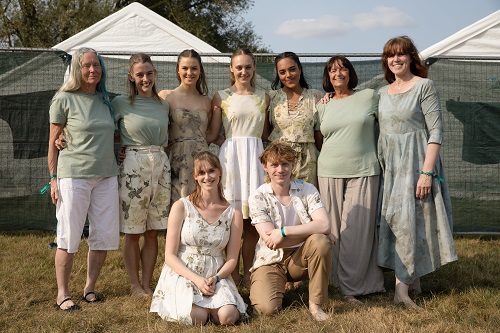
The Background - Ballet Folk
Our aim is to create theatrical ballet works that explore the rich traditions of folklore and storytelling in collaboration with artists from across the folk community.
Our work has a commitment to environmental sustainability, is adaptable for all types of performance venues, and is accessible for all.
A meeting between Deborah (Norris) Ward, Director and Choreographer of Ballet Folk and singer Lucy Ward at one of the latter's gigs in Wigan Parish Church in 2015 led to the pair deciding to share some of their initial thoughts for a story ballet/folk music collaboration, which they presented as 'The Two Princesses' at the one-day 'Locating Women in "The Folk"' Conference held at the University of Sussex in 2018. Fate, or good fortune, shone kindly, as Rebecca Stewart, Festival Manager of the Cambridge Folk Festival, was present in the audience, engaging them at her Festival and giving them a very generous commission. This, together with further crowdfunding, saw the creation of 'The Sisters of Elva Hill', initially as a one-off project.
The audience response was extremely positive and prompted Deborah to reflect on the genre 'folk ballet', a term used by a critic in one of the reviews, leading her to begin to formulate a concept for the company. A tour for 2020, with other festivals, was booked, but the pandemic intervened. However, 'Elva Hill' was restaged in 2021 for Shrewsbury Festival and Cecil Sharp House.
The winner of the Fatea Innovation Project Award in 2019, surely even Nostradamus could have predicted where this story is heading.
Serendipity has also played a role in subsequent Ballet Folk projects. A chance meeting at Dartington with Katie Whitehouse of 'From The Whitehouse', led to working with The Ciderhouse Rebellion for 'The Tears of Jenny Greenteeth', whilst a collaboration with The Willow Trio and Thistle Ridge Films, saw the creation of Eala Shàilein/The Swan of Salen, a small-scale folk ballet film that has been touring extensively through Scotland since its premiere in 2023.

The Collaboration - Freedom To Roam/Ballet Folk
The involvement of Ballet Folk in the overarching FtR project is refreshingly simple - Deborah responded to a call-out message from Eliza on Twitter. The realisation that both shared similar thoughts, for example on humanity, the climate crisis, conservation and freedom, helped develop a mutual respect, and from the moment Deborah experienced the 'Rhythms Of Migration' performance at Cecil Sharp House, it was clear to her that the music was such an obvious score for a ballet.
It should also be music to FATEA Founder/Editor Neil's ears that the aforementioned FATEA Innovation Awards feature prominently in the story of the collaboration, as Deborah tells me "…so it was inevitable as I saw that we should come together, it's like Fatea manifested it!"

The Performance (as billed) - Rhythms Of Migration - Freedom To Roam & Ballet Folk
Having been privileged to have seen a performance of the original 'Rhythms Of Migration' multi-media show in Aberystwyth on its inaugural outing in 2021, I was keen to see how the project had evolved, and was especially interested in what, if anything, the Ballet Folk contribution could add. Thanks to understanding colleagues, a jigging of rotas meant that I was able to be released from my Moot Hall Front of House Manager role in order to catch the performance on the main stage.
In the original manifestation the intricate relationships with the land and between each other, was highlighted through themes of compassion, caring, humanity, hope and rewilding, which permeated both the music and the visual imagery, presenting a powerful message. At Folk East, this deep interconnection between nature was further celebrated, as the powerful original narrative was truly reimagined through the medium of music and dance.
The music composed by Catrin Finch, Eliza Marshall, Dónal Rogers and Jackie Shave, an incredibly complex, dynamic and emotional roller-coaster ride, clearly offered a rich palette on which to develop the choreography.
Occupying the tea-time 16.50-17.50 slot, the performance was introduced as a continual piece, although sporadic applause suggested that the audience were keen to show appreciation during, rather than having to wait until the conclusion. The eight musicians performing comprised Chris Allan, (cello), Kuljit Bhamra, (tabla), Catrin Finch, (harp), Eliza Marshall, (flutes/director), Jordan Murray, (percussion), Karenza Peacock, (violin), Dónal Rogers, (keyboard, guitar, vocal) and Jackie Shave, (violin), whilst the main dancers were introduced as Marina Fraser, Alex Mulcahy, Nikki Skinner, Viola Turbeville-Smith and Karishma Young. Donna Ferry and Katie Whitehouse were credited as Executive Producers.
Deborah explains that Jackie Shave offered a beautiful concept/narrative with which she worked, to establish a story about a brother and sister setting out on a journey, being faced by challenges from war, drought, famine, but overcoming these things by following a bird, (represented by Eliza's flutes) to help them to safety and the power of human connection and community. This melds perfectly with the broader interpretation of the 'journey' permeating the CD release.
As the opening notes were played and the dancers took to the stage, it was noticeable from my grass-seated vantage point front of stage than many around me were initially slightly perplexed, or perhaps curious would be a better term, after all, the music was, for many I'm sure, being heard for the first time, and was certainly different both to the previous group The Drystones, (shout out to Evan Carson who played on the 'Rhythms Of Migration' album), and that which was to follow, Angeline Morrison and The Sorrow Songs Band; add into the equation the ballet dancers and this becomes even more understandable. However, not long into the set, by the end of the title track, and as the journey laid out in the 'story' being told was being unfolded, the interest and appreciation were palpable, the front of stage barrier quickly filled with a throng of folk, there was less space around where I was sitting, and even Peter Knight was noted watching on intently.

Musically, the gentle rhythms, suggestive of an awakening world moving forwards, created a joyous, buoyant feeling. These, however, were suddenly shattered by the stark reality of the fragility of the eco-system in Arctic Lament, with its melting ice-caps and disappearing landscapes, as a much more sombre tone was created. In terms of the accompanying dance for this section, although Deborah is credited as choreographer, she states that all of her work is created in collaboration with the dancers, as they bring such talent and vision to the creative space. Working in response to the music, the aim throughout was to establish each environment within the ROM narrative, and reflect this in the movement. Thus here, in 'Arctic Lament' the movements comprised frozen, slicing, structures.
Musically the performance was totally and utterly spellbinding. The melding of African, Celtic, Indian and, to my ears, South American influences, incorporating a fusion of styles and rhythms, reflected the consummate musicianship of all involved.
Highlights provided by the dancers were varied and many, and all of them are to be applauded, not only for their ability, but also their stamina, there was very little 'off-stage' time. Co-choreographer Marina Fraser created the movements to both 'Rain Coming' and 'Run Wild', brilliantly capturing the emotions and rhythmic patterns of each, with bold, articulate gestures.
One section which particularly took my eye was the choreography to 'Brutal'. The music references a battle, and is angry, frenetic and somewhat menacing. My initial hypothesis that there was a deliberate attempt to marry aspects of Folk Dance culture with both ballet and modern dance was confirmed by Deborah who clarified that for 'Brutal' the dance drew from Border Morris vocabulary, using the sticks and circular hopping patterns, "Its style is furious, but grounded and the ballet needed this." The music also depicts entrapment, so the use of the sticks allowed the dancers to create a cage, and a sense of desperation, through the movement. The synergy of music and movement personified.
Another highlight was the dance accompanying the penultimate musical piece, 'Seekers'. Here, the dancers used sheets of silk to represent the sails of a ship and the water, their rhythmical footwork patterns juxtaposed with Karishma Young's slow-moving solo.
Also of pleasing note was the community dancer engagement of two local dancers who answered an invite and attended local auditons just prior to the festival. Outreach has always been part of Ballet Folk, and bringing dance to people of all ages and disabilities is very important, especially in the landscape of dance in education, which has been savagely decimated in recent years by the previous government. This particular community project was aimed at adults. Ballet has a serious ageism problem and again it is one Deborah's personal campaigns to challenge this.
Particular mention must also be made of the stunning costumes. Sourced from Devon artist Daniella Brockelsby, of Penelope's Child. She used a natural dying process that uses actual flowers/leaves on the fabric so they were the perfect choice for this 'environmentally friendly' production. Gillian Norris, (Deborah's mother), then adapted some of the garments to make them 'dancer friendly' to allow for movement and more fullness in the skirts.
In recognition of the need for 'full disclosure', it should be stated that Neil/FATEA sponsored the costumes with a generous donation, and that Tony Birch, also of this parish, is also a proud supporter of Ballet Folk.
Finally, it should be acknowledged that Eliza and Deborah were able to see this stage of the Freedom to Roam project come to fruition thanks to the incredibly positive support of Katie Whitehouse (From the Whitehouse) and Becky Marshall-Potter (Folk East).
To conclude the Festival Review element, my observations are that this was very much a "you had to be there" occasion. The performance well and truly exceeded my expectations, which were already very high. The collaboration with Folk Ballet took Eliza's 'Freedom to Roam' project to a different level.
As for the good people at Folk East? Well, the audience kept growing throughout the set and delivered a hearty, richly deserved, standing ovation at the end of what had been a triumphant premiere. And I'm pretty sure that I saw Peter Knight still there at the end too.

The Future
The Folk East performance needs to be toured, to reach more people. The creatives involved need time and space to develop, adapt and re-visit, where necessary, what is already in place. This comes at a great cost, more so given the number of musicians and dancers involved. Securing funding, through a variety of means is the only realistic option, and one that is actively being sought. Rest assured that FATEA will be at the forefront of communicating any news on this front.
With respect to the Eliza's overarching 'Freedom to Roam' project, 'Rhythms of Migration' was/is Part One of a three part 'Freedom to Roam' vision/journey.
Part Two - 'Disconnected', a new album and new documentary, is slated for 2025, with Part 3 - 'Reconnected', again a new album and new documentary, planned for 2028 .
For much more detailed information on the project, please visit the excellent, and extensive, 'Freedom to Roam' website
https://www.freedomtoroam.earth/
The rhythms of migration should have no boundaries. Our humanity, wildlife and biodiversity are intrinsically interconnected, for we are all nature. Freedom To Roam celebrates the possibilities, the opportunities and the desire for hope and compassion in this, our beautiful planet earth.
David Pratt - words, Jez Ward - Pics
Fatea Showcase Sessions
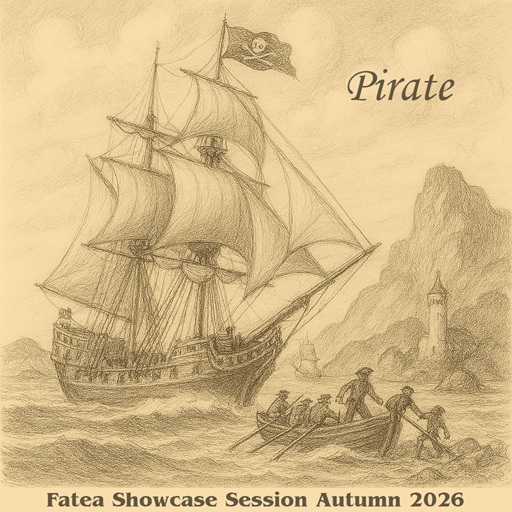
The Fatea Showcase Sessions are a series of downloads featuring acts that we've really enjoyed and think that more people should get the chance to hear.
Pirate is the current session and features 16 fantastic artists check out the website to find out more about them and download your copy
www.fatea-showcase-sessions.co.uk for all the artist information.
Folk Friday Radio
Check out our shows and many other great shows on: