Crossing The Bar
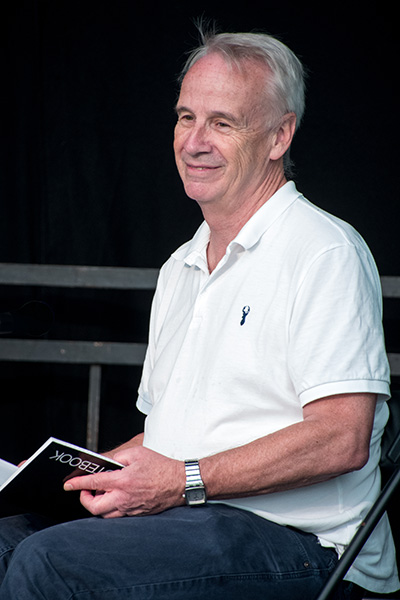
Colin Irwin
Colin Irwin had already left as assistant editor of Melody Maker when I first met him. He was editing Number One and contributing to numerous other publications at the time and subsequently, predominantly Mojo.
Inevitably it was Cambridge Folk Festival where I first bumped into him, Fatea was a an A4 based fanzine, self printed, yet Colin was really interested in what was happening around it, made a few suggestions over what we might do to increase the circulation.
Over the years we had a number of chats, some long, some short, a particularly memorable one being when Fatea moved to the internet in 1996, a well-remembered discussion that went long into the night. The thing with Colin, he was always passionate about music, which combined with his eloquent use of the English language made sure that you were always going to have a good time in his company and regardless of if you agreed with each other.
It was no surprise that he was an author as well with a number of books about the folk traditions, including one, "Sing When You're Winning", which saw him writing about the songs sang from the various terrace songs up and down the country. Similarly it was no surprise that he also took his talents into playwriting.
In more recent years, he was on the stage at Cambridge featuring some of the festival's best with the Mojo interview on the Club Tent stage, always a fascinating start to the Friday line up.
The folk and roots artists that Colin championed over the years are way too numerous to list here, the spontaneous outburst of thanks and tributes from so many artists when they first heard of Colin's passing speaks for itself. The folk world would be a poorer place without Colin Irwin and he will be missed by many.
Neil King
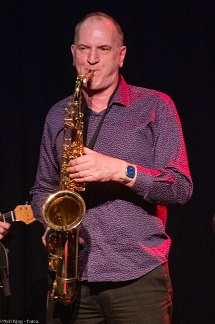
Alan Whetton
Alan Whetton, who has died of lung cancer, aged 58, blew tenor saxophone with my Clayson and the Argonauts outfit from 1977 to 1979 while clinging onto a job at a telecommunications firm in Slough without inviting the sack. A sight-reading east Midlander, he'd learnt his trade from the age of ten when among horn sections taking their place on palais bandstands to begin a given night's polished mixture of across-the-board favourites from post-war swing to whatever commotions were then stirring up the nation, albeit on the tried-and-trusted guidelines about what the public ought to want. Yet Alan would both automatically buy a ticket for a town hall jazz concert and keep abreast of pop that wasn't chart-directed candyfloss.
As an instrumentalist, he was exactly what we needed. Moreover, not only was Whetton a quick study, but he was sufficiently game to go along with the costumery and other non-musical stratagems deemed necessary for our ship to plough ever onwards. My only objection about Whetton becoming an Argonaut was unspoken. Until his arrival, I'd been at six feet, the tallest - just - member of the ensemble, and Alan's rust-coloured hair bristled inches above my blond mop - an imposition that came into clearest focus when his microphone flanked mine on the boards.
Nevertheless, his commitment to the group was such that he once took it upon himself to confront an obdurate entertainments manager about our cut of the takings that night. Rather than accept any it-doesn't-work-like-that excuses, he forced the fellow into a watery smile and to pay not a cheque to our agent, but cash in full, there and then, directly to us.
After he left the group, he became an in-demand session musician - who the sharp-eyed would spot on television in the cast of Cliff Richard's Wembley Stadium spectacular in 1989, and on Top Of The Pops backing 1980s hitmaker Howard Jones. He functioned too with Dexy's Midnight Runners, Shakin' Stevens, The Blues Band and The Manfreds among others, and produced two albums by folk entertainer Vin Garbutt.
Alan also lectured in Music and Music Theory at Reading College prior to uprooting from Berkshire to the Isle of Wight from where he commuted to concerts with the diverse likes of Pulse (Pink Floyd tribute band), Geno Washington's Ram Jam Band - and Feast Of Fiddles, founded in 1994 by melodeonist Hugh Crabtree, and fronted by well-known violinists of British folk-rock stamp, plus its spin-off P.I.G. (acronym for 'Pretty Interesting Group') for whom he also revealed talent as a keyboard player, and was the principal composer of selections on the combo's most recent album, No Fiddlin'.
He is survived by his wife Jane and three children from a previous marriage.
Alan Clayson
Fatea Showcase Sessions
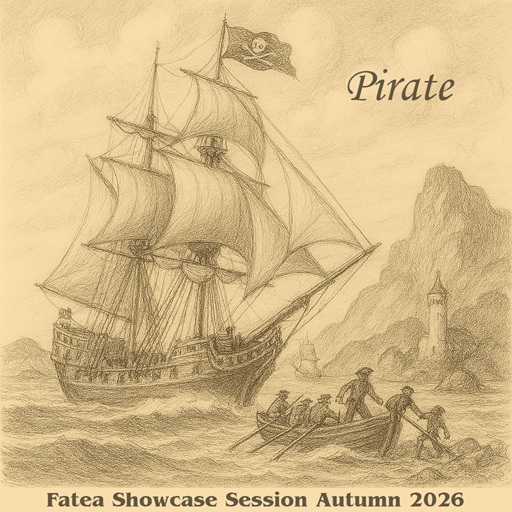
The Fatea Showcase Sessions are a series of downloads featuring acts that we've really enjoyed and think that more people should get the chance to hear.
Pirate is the current session and features 16 fantastic artists check out the website to find out more about them and download your copy
www.fatea-showcase-sessions.co.uk for all the artist information.
